
You’re Probably Undercharging: The Pricing Math Most Solopreneurs Get Wrong
Lets review your rates and raise them.

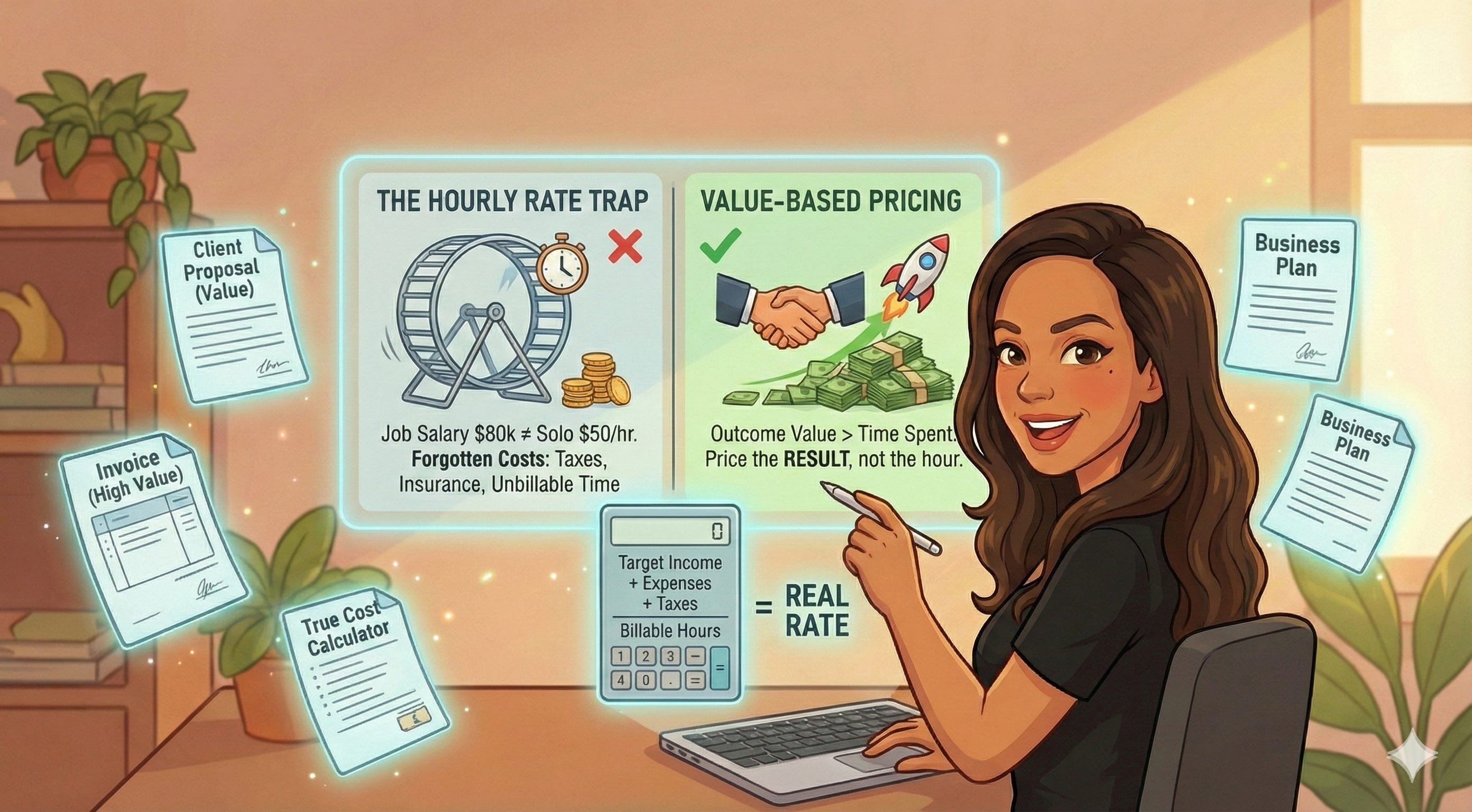
Taking a break from ai/tech this week to go back to a business basic that is coming up in a lot of our WorkSmart meetings lately. Pricing! You’re probably undercharging for your work. I know I am certainly undercharging for the Worksmart membership so lets talk about why we do this and how do we push ourselves out of it!
I’ve had this conversation with hundreds of freelancers, consultants, and service providers over the years. People running agencies of one. People who left corporate jobs to do their own thing. People who got laid off and turned their skills into a business.
My husband runs a 7 figure production agency, and every quarter we are looking at the numbers to figure out which clients we’re lowkey barely breaking even on because of all the hidden costs and taxes of being a solopreneur. It took us basically year to get pricing right and its no easy feat! It also required that we fire some clients which was painful because they had been very loyal.
Let me show you the math that’s keeping you from reaching your profit and take home revenue goals.
The Hourly Rate Trap
When most people go solo, they calculate their rate like this:
“I made $80,000 at my job. That’s about $40 an hour. So I’ll charge $50 an hour. That’s more than I was making, so I’m doing great.”
This math is wrong. Catastrophically wrong my friends.
Here’s why:
When you had a job, you got paid for every hour you worked. You also got health insurance. Retirement contributions. Paid vacation. Sick days. Payroll taxes covered. Equipment provided.
When you’re solo, you pay for all of that yourself. Plus you’re not billing 40 hours a week. You’re lucky if you bill 25.
Let me run the real numbers.
What $80K in salary actually costs an employer:
Salary: $80,000
Employer payroll taxes (~8%): $6,400
Health insurance (~$7K-15K/year contribution): $10,000
Retirement match (3-6%): $4,000
Paid time off (vacation, sick, holidays): $7,500
Equipment, software, overhead: $5,000
Total cost to employer: $112,900
That’s what you were actually costing them. Not $80K. Over $112K.
Now let’s look at your solo math:
You’re charging $50/hour. You bill maybe 25 hours a week (the rest is admin, marketing, sales, invoicing, etc.). That’s $1,250 a week.
Multiply by 48 weeks (assuming you take some time off): $60,000
Now subtract:
Self-employment tax (15.3%): $9,180
Health insurance: $8,000
Retirement (if you’re even saving): $6,000
Software and tools: $2,000
Accounting and legal: $2,000
You’re left with: $32,820
You took a $47,000 pay cut to have “freedom.”
This is why so many solopreneurs burn out and go back to jobs. Not because they couldn’t do the work but because they miscalulated their expenses.
What Your Rate Should Actually Be
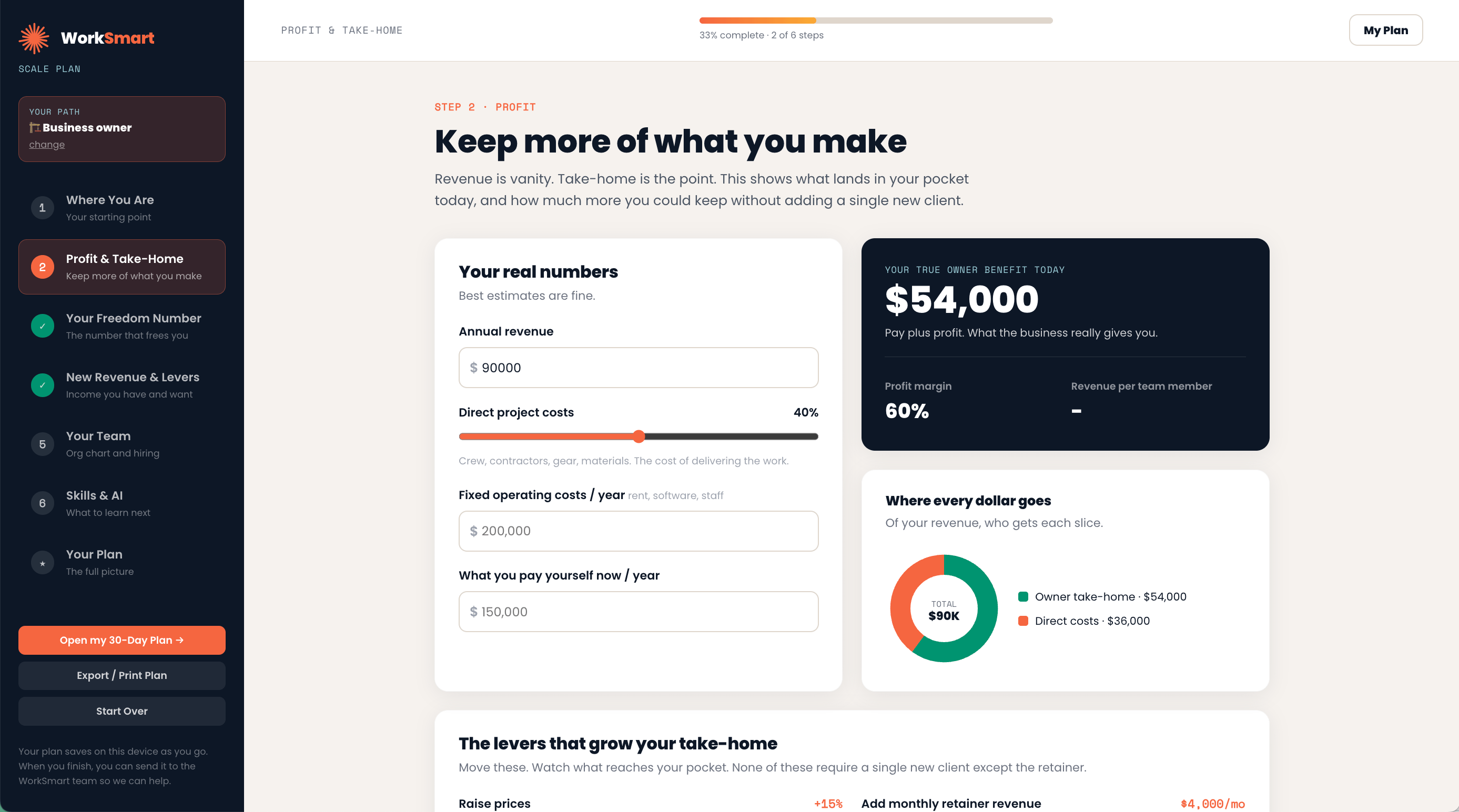
Let’s work backward from what you actually need.
Step 1: Calculate your true target income.
What do you want to take home after taxes and business expenses? Be honest. Include what you need to live, save, and not feel constantly stressed about money.
Let’s say it’s $100,000.
Step 2: Add your business expenses.
Health insurance, software, equipment, contractors, accounting, everything. Let’s say $25,000.
Step 3: Add taxes.
Self-employment tax plus income tax. Depending on your situation, let’s estimate 30%.
So you need to gross: ($100,000 + $25,000) / 0.70 = $178,571
Step 4: Divide by your billable hours.
If you work 48 weeks a year and bill 25 hours a week, that’s 1,200 billable hours.
$178,571 / 1,200 = $149 per hour.
That’s your minimum rate to hit $100K take-home.
Not $50. Not $75. $149.
And that’s assuming you actually bill 25 hours every single week, which most people don’t.
Why This Feels Impossible
I know what you’re thinking. “Nobody will pay $150 an hour for what I do.”
Maybe. But let me push back.
First: Some people will. Not everyone. But you don’t need everyone. You need enough clients who value what you do at the rate that makes the math work. Finding them is a different problem than whether they exist.
Second: Hourly is often the wrong frame. If you charge $150/hour, clients think about the clock. They feel every minute. They question every invoice. But if you charge $3,000 for a project, they think about the outcome. Same money, different psychology.
Third: Low rates attract bad clients. The clients who negotiate hardest on price are usually the hardest to work with. They demand the most. They respect your time the least. They’re never satisfied. Raising your rates often improves your client quality, not just your income.
Fourth: Your competition isn’t who you think. You’re not competing with the cheapest option. You’re competing with the alternatives your ideal client is actually considering. Sometimes that’s another freelancer. Sometimes it’s hiring an employee. Sometimes it’s an ai tool. Sometimes it’s doing nothing. Position yourself against the right alternative and price accordingly.
The Value Conversation
Stop thinking about what your time is worth. Start thinking about what the outcome is worth.
If I help a company close a deal worth $500K, what’s that worth to them? A lot more than my hourly rate times hours worked.
If I build a website that generates $10K a month in revenue, what’s that worth? A lot more than a day rate.
If I solve a problem that’s been costing someone $50K a year in lost productivity, what’s that worth? A lot more than “my rate is $150/hour.”
Value-based pricing means understanding what the work is actually worth to the client, and pricing based on a fraction of that value instead of on your time.
This doesn’t work for everything. Some projects are hard to tie to value. Some clients won’t have the conversation. But when it works, it transforms your business.
A project that would be $3,000 at your hourly rate might be worth $15,000 priced on value. Same work. Same hours. Five times the revenue.
How to Raise Your Rates
Okay so how do you tell someone you’re raising your pricing…
For new clients: Just charge more. Seriously. Quote your new rate. See what happens. Most people assume they’ll lose clients if they raise rates. In practice, the hit rate often stays the same. Fewer proposals go out, but the same percentage close. Except now they close at higher numbers.
For existing clients: Gradual increase with notice. “Starting next quarter, my rate is increasing from $X to $Y. I wanted to give you plenty of notice.” Some will leave. Most won’t. The ones who leave were probably your worst clients anyway.
For the fear: Do the math. You need fewer clients at higher rates. If you charge twice as much, you need half as many clients to make the same money. That’s less marketing. Less admin. Less chaos. More time for the work you actually enjoy.
For the impostor syndrome: Recognize it. The voice that says “who am I to charge that much” is not a reliable narrator. It’s fear. The market will tell you if you’re overpriced. Until then, you’re guessing, and most people guess low.
If your rates don’t support a real business, you’ll burn out. You’ll resent the work. You’ll cut corners because you’re not being paid enough to do it right. You’ll eventually quit and go back to a job, and the whole experiment will feel like a failure.
Charging appropriately isn’t greedy. It’s the only way to build something that lasts.
The best freelancers I know charge rates that seem high. They also do the best work. They also have the best client relationships. They also have the longest careers.
That’s not a coincidence.
The Exercise I’d Recommend
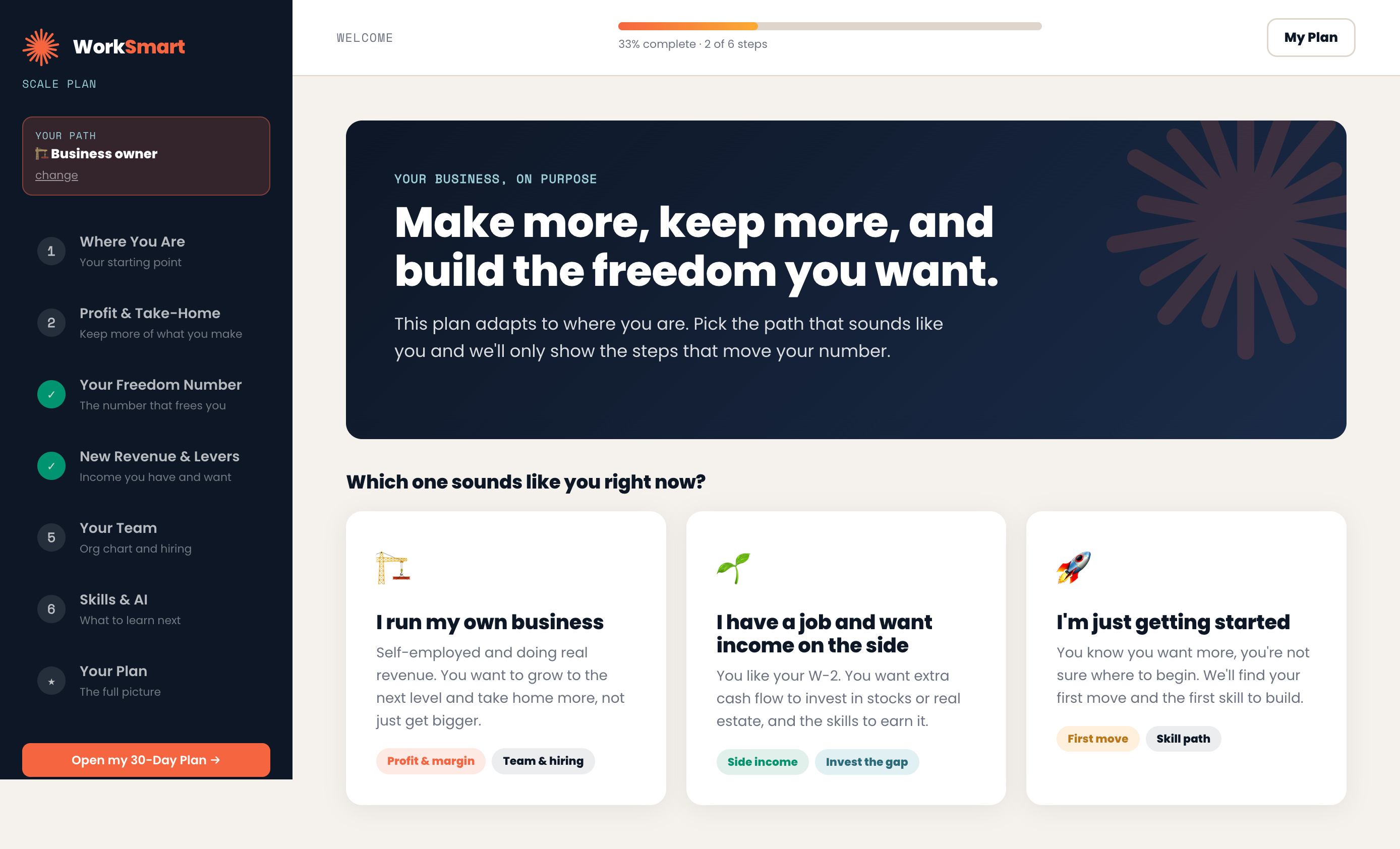
I built a tool to help you through how to do this. Included in your WorkSmart membership or you can buy it here.
This week, run the real math on your business.
What do you actually need to take home? What are your real expenses? What’s your true tax burden? How many hours do you realistically bill?
Then calculate what your rate needs to be.
If there’s a gap between that number and what you’re charging, you have two choices: Raise your rates, or accept that your current business model doesn’t work.
That sounds harsh. But I’ve watched too many talented people I advise at WorkSmart run themselves into the ground because they never did this math. They assumed it would “work out eventually.” It doesn’t work out eventually. It works out when you make it work.
Run the numbers. See where you actually stand. Then decide what to do about it.
Pricing is one of the things we work through in our WorkSmart community. How to calculate your rate, how to communicate it, how to have the value conversation with clients.
Thank you for the reminder, Morgan!